























How Managed Farmland Is Emerging as a Smart Asset Class in Karnataka
Why Mogg’s Estates Is Setting the Benchmark for Managed Farmland Investment in Karnataka Bengaluru (Karnataka) [India], February 19: On the outskirts of Bengaluru, where city lights slowly fade into open skies and fertile fields, a quiet transformation has been taking place. Professionals, entrepreneurs, and families who once chased only apartments and commercial spaces have begun [...]

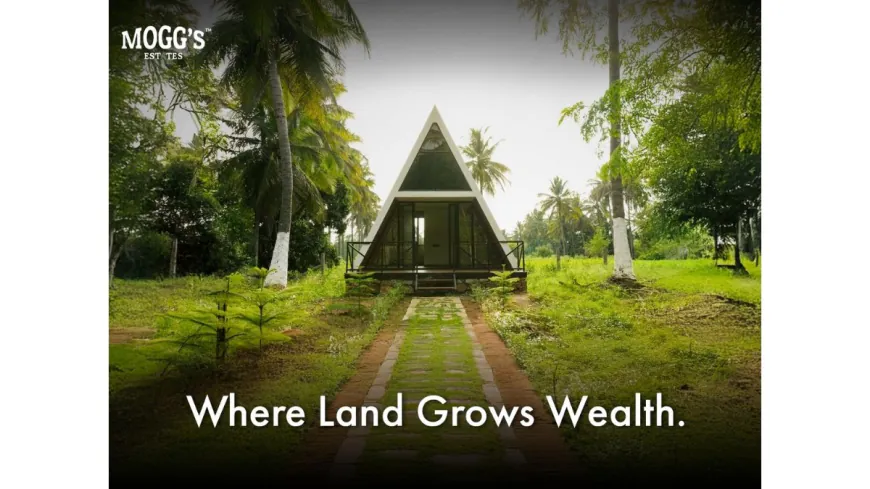
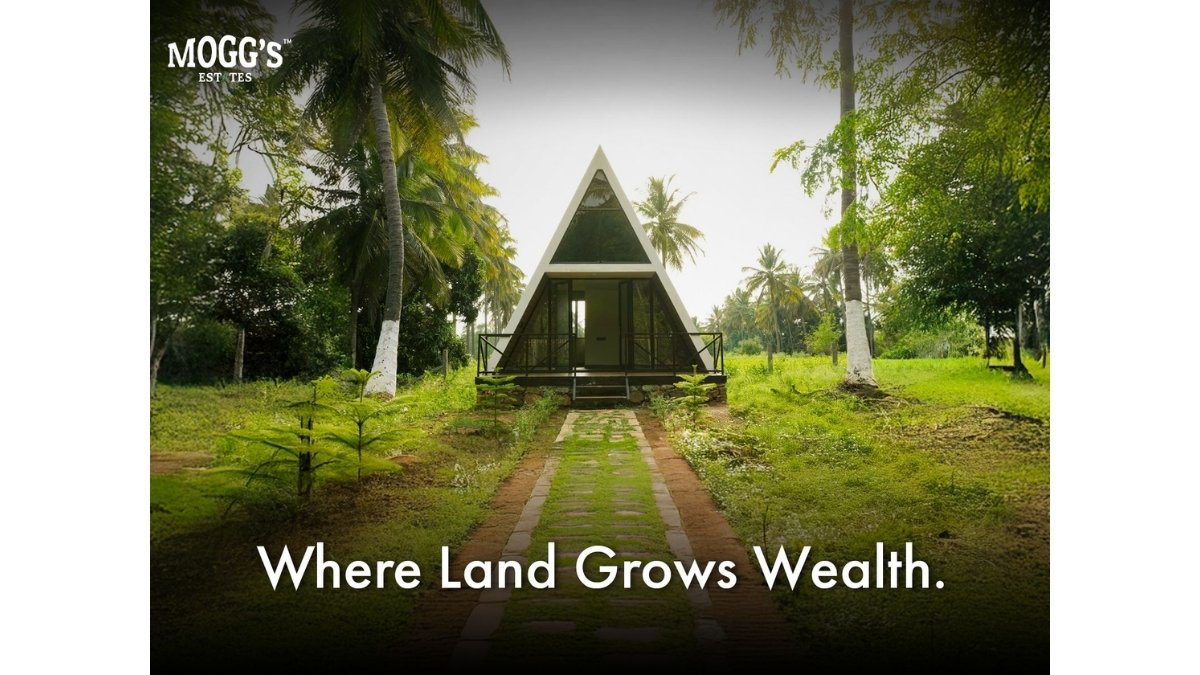
Bengaluru (Karnataka) [India], February 19: On the outskirts of Bengaluru, where city lights slowly fade into open skies and fertile fields, a quiet transformation has been taking place. Professionals, entrepreneurs, and families who once chased only apartments and commercial spaces have begun looking toward something far more timeless: land. Not just any land, but thoughtfully curated, legally secure, and professionally managed farmland.
At the center of this shift stands Mogg’s Estates, a brand that didn’t just enter the farmland space but redefined how urban India experiences agricultural investment.
The Beginning of a Different Vision
The story of Mogg’s Estates began with a simple observation: many people longed to own farmland, yet very few understood how to navigate it. Questions around legal eligibility, land conversion norms, documentation clarity, soil fertility, water sources, and ongoing farm maintenance often discouraged even serious investors.
Instead of treating farmland as a conventional real estate product, Mogg’s approached it as a responsibility to the investor, to the soil, and to the ecosystem.
The result? A structured, transparent model that made managed farmland near Bangalore not just accessible, but reliable.
The PDSM Policy: A System Built on Trust
One of the strongest pillars of Mogg’s Estates is its well-defined PDSM Policy, a four-step framework that simplifies farmland ownership while maintaining professional standards.
Procure: Land is carefully sourced after evaluating soil health, water availability, connectivity, and long-term appreciation potential. The focus is not just on location, but on sustainability and productivity.
Develop: Raw land is transformed into structured farmland with fencing, internal roads, drip irrigation systems, plantation planning, and soil preparation. Every development decision is aimed at long-term agricultural yield and ecological balance.
Sell: Buyers are guided through transparent documentation, legal compliance, and site visits. The emphasis is clarity, no ambiguity, no hidden complexities.
Manage: This is where Mogg’s truly differentiates itself. Post-purchase farm management includes crop planning, plantation maintenance, irrigation oversight, and regular monitoring by agricultural experts. Investors don’t need farming knowledge to benefit from their land; Mogg’s ensures professional upkeep.
Through this PDSM model, farmland ownership shifts from being overwhelming to effortless.
More Than Land, A Living Asset
In a time when markets fluctuate and urban spaces saturate, farmland stands as a tangible, appreciating asset. Managed farmland offers dual advantages: capital appreciation and agricultural yield. But beyond numbers, it provides something far deeper: connection.
Mogg’s Estates understands that farmland is not merely an investment. It is a legacy. A place where children can run barefoot, where trees planted today will fruit for decades, and where families can experience nature without sacrificing urban comfort.
This philosophy is reflected across their curated farmland developments. Projects like Mogg’s Sagwan Farms, Mogg’s Arecanut Farm, Mogg’s Ashwa Farm, Mogg’s Aira Farms, Mogg’s Sadhvana Farm, Mogg’s Terrahill Farms, and Mogg’s Nidhivanaa are not positioned merely as plots for sale. They are ecosystems, carefully planned communities of orchards, timber plantations, fruit-bearing trees, and green landscapes.
Each of these projects embodies the Mogg’s approach: structured development, sustainable farming practices, water-conscious irrigation systems, and long-term agricultural vision.
Sustainability at the Core
Unlike speculative land banking models, Mogg’s integrates sustainable farming practices into every development. Drip irrigation minimizes water wastage. Plantation choices are made based on soil compatibility and climatic conditions. Fruit orchards, teak plantations, and mixed-crop models ensure biodiversity while enhancing yield potential.
Projects like Sagwan Farms highlight long-term timber cultivation, while developments such as Aira Farms and Ashwa Farms focus on fruit-bearing orchards. Sadhvana Farms reflects a balance between agricultural productivity and lifestyle appeal. Terrahill introduces structured farmland living with thoughtfully planned layouts.
Yet, regardless of the project name, the philosophy remains consistent: responsible land stewardship.
Strategic Locations, Long-Term Vision
Location plays a crucial role in farmland investment. Mogg’s Estates strategically selects areas around high-growth corridors near Bengaluru and other developing regions of Karnataka. Connectivity, infrastructure expansion, and future development potential are all factored into procurement decisions.
But Mogg’s does not rely solely on appreciation driven by urban expansion. The land’s intrinsic agricultural value remains the foundation. Fertility, water access, and sustainability determine long-term success far more than speculation.
Professional Management, Personal Ownership
One of the biggest barriers to farmland ownership is operational management. Who will maintain the crops? Who ensures irrigation runs efficiently? Who monitors plantation health?
Mogg’s Estates bridges this gap. Through professional farm management services, landowners enjoy passive involvement while the farm is actively maintained. Regular monitoring, agricultural supervision, and maintenance ensure productivity without requiring investors to become hands-on farmers.
This is what makes managed farmland an increasingly popular alternative asset class, especially for urban investors seeking diversification beyond stocks and apartments.
Building Generational Wealth
The true value of farmland unfolds over time. Trees mature. Soil strengthens. Infrastructure improves. Surrounding regions develop. Appreciation compounds quietly, steadily.
Mogg’s Estates positions farmland not as a quick-return scheme, but as a generational asset. A mango orchard planted today may fruit for decades. A teak plantation may mature into substantial timber value. The land itself remains a finite resource, increasingly scarce, increasingly valuable.
Owning farmland through Mogg’s is not about short-term gains. It is about planting something that outlives you.
The Story Continues
From Aira Farms to Sagwan Farms, from Sadhvana to Ashwa, and through developments like Terrahill, the journey of Mogg’s Estates reflects one consistent idea: that land, when handled with integrity and expertise, can be both profitable and purposeful.
In a rapidly urbanizing world, Mogg’s Estates offers something rare: stability rooted in soil, growth powered by nature, and wealth cultivated with responsibility.
Because at the end of the day, buildings rise and fall, markets surge and dip. But fertile land, cared for, managed well, and legally secure, remains timeless.
And that is the legacy Mogg’s Estates continues to cultivate.
If you object to the content of this press release, please notify us at pr.error.rectification@gmail.com. We will respond and rectify the situation within 24 hours.
What's Your Reaction?