

























Beyond Ethics: How One Visionary Is Building AI That Thinks With Virtue
As the world fractures along lines of ideology, race, and fear, Shekhar Natarajan’s Angelic Intelligence offers a radical counter-narrative — a Human Index to answer the Hate Index London [United Kingdom], February 24: In this opinion piece, Shekhar Natarajan explains how he aims to promote ethical AI as a philosophy, and why it remains important. [...]

As the world fractures along lines of ideology, race, and fear, Shekhar Natarajan’s Angelic Intelligence offers a radical counter-narrative — a Human Index to answer the Hate Index
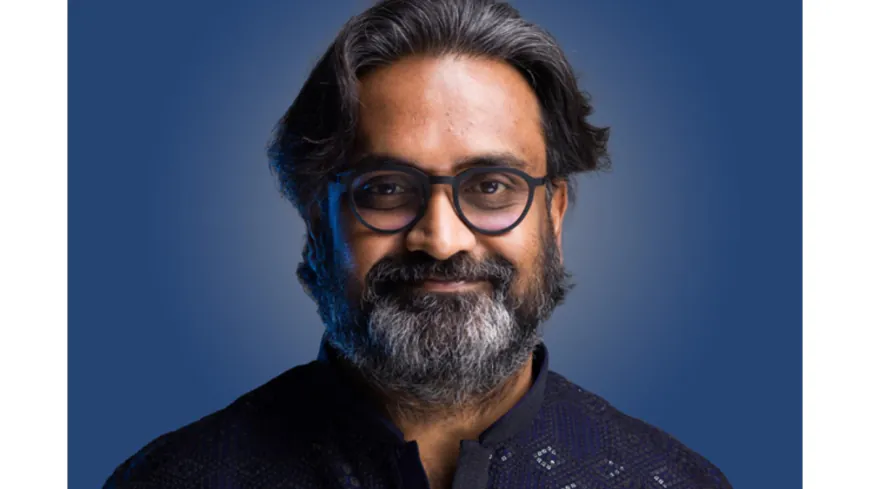
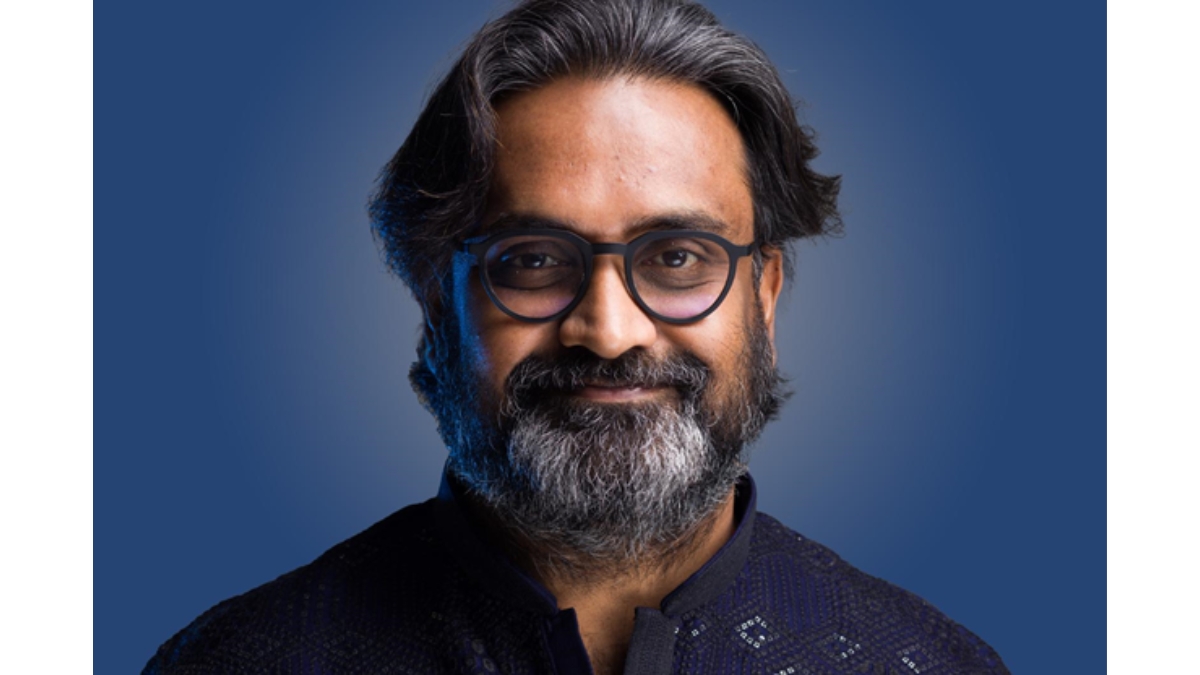
London [United Kingdom], February 24: In this opinion piece, Shekhar Natarajan explains how he aims to promote ethical AI as a philosophy, and why it remains important.
The corridors of the British Houses of Parliament have heard many arguments about power, democracy, and the future of civilization. But when Shekhar Natarajan walked those storied halls and stood before lawmakers to speak about artificial intelligence, he brought something unusual to that ancient chamber: not a warning, not a pitch, but a philosophy — one rooted in virtue, in love, and in the ancient wisdom of humanity’s best impulses.
Parliament recognized him with a certificate for his “thought leadership in ethical artificial intelligence.” But Natarajan, the founder and CEO of Angelic Intelligence (operating through Orchestro.AI), would be the first to say the recognition points beyond ethics entirely. What he is building, he argues, is something civilization has never attempted before: technology that does not just avoid harm, but actively embodies virtue.
“The world doesn’t need AI that is less bad. It needs AI that is genuinely good — not by accident, but by design.”
A World Coming Apart at the Seams
To understand why Angelic Intelligence matters, you have to first reckon with what is happening to the world it seeks to serve. The numbers are stark and worsening. Global hate crimes are at multi-decade highs across the United States and Europe. Social media algorithms have been demonstrated, repeatedly, to amplify division over nuance, outrage over understanding, tribalism over common humanity. The very technology that promised to connect us has become, for many researchers, the most efficient hate-propagation machine ever built.
Now artificial intelligence — trained on that same polarized internet — threatens to amplify the fracture further. When AI models learn from the unfiltered web, they absorb its worst impulses alongside its best. They hallucinate facts, reinforce bias, satisfy the user’s desire for validation over their need for truth, and operate with a troubling ethical inconsistency: brilliant one moment, reckless the next.
The AI industry’s response has largely been to build guardrails after the fact — to train models on human values as an overlay, a kind of ethical paint applied to a wall that was built without foundations. Natarajan calls this approach fatally flawed. “Ethics bolted on after training is security theater on a broken foundation,” he says. “You are asking virtue to patrol a system that was never designed to be virtuous.”
The Human Index: A Counter to the Hate Index
At the heart of Angelic Intelligence is a deceptively simple proposition: what if we measured AI’s impact not by performance benchmarks, but by a Human Index — a scored, transparent measure of how much each decision serves human benefit, dignity, and flourishing?
In an era when researchers track the rise of Hate Indexes — quantitative measures of extremist content, dehumanizing language, and radicalization pathways — Natarajan is building the computational mirror image. Every decision Angelic Intelligence touches is scored against a framework of cross-cultural virtues, drawn not from any single tradition but from the convergent moral wisdom of human civilizations across centuries and continents.
This is the architecture of what he calls Virtue-Native Intelligence — not AI that tries to be ethical, but AI in which virtue is the computational substrate itself. The distinction is significant. In current AI systems, safety constraints are imposed from the outside, like a cage around a tiger. In virtue-native systems, the tiger is simply not built to harm.
“When hate rises globally, the answer is not better content moderation. The answer is building systems that are incapable of being weaponized for hate in the first place.”
From Westminster to Davos: A Global Recognition
The Houses of Parliament recognition was not an isolated moment. Natarajan has been invited to present at the World Economic Forum in Davos and the Future Investment Initiative — two of the most influential stages in global economics and policy. The fact that a founder building virtue-native AI is being placed alongside heads of state, central bankers, and the architects of global capital says something meaningful about where the conversation around AI is heading.
For years, the dominant AI discourse has been split between two camps: the accelerationists, who believe moving fast and building powerful systems is an unqualified good, and the safety advocates, who argue for slowdown, regulation, and red lines. Natarajan occupies a philosophically distinct third position: build faster, but build differently — embed virtue into the architecture itself so that acceleration and safety are not opposing forces but the same force.
His framework, the 27 Digital Angels, represents specialized AI agents embodying cross-cultural virtues — compassion, prudence, precision, courage, fairness — each drawn from the convergent moral traditions of human civilization. They do not operate sequentially but in deliberative concert, debating each consequential decision through what Natarajan calls the MACI Framework: Multi-Architecture Consequential Intelligence. The output is not just an answer, but a reasoning chain transparent enough that the human can see every virtue’s contribution to the conclusion.
The Man Behind the Philosophy
To understand why Shekhar Natarajan builds the way he does, you have to understand where he comes from. He arrived in America from South Central India with $34 in his pocket. His mother, who had no formal power, stood outside a school headmaster’s office for 365 consecutive days until the man relented and gave her son admission. She pawned her wedding ring — 30 rupees — to fund his education.
That $34 became a career spanning Walmart, where he grew the grocery business from $30 million to $5 billion; Disney, where he contributed to MagicBand technology; PepsiCo, Coca-Cola, Target, and American Eagle. He holds more than 70 patents. He studied at Georgia Tech, MIT, Harvard Business School, and IESE. Every morning at 4 AM, before the world demands anything of him, he paints — classical Indian painting — a discipline of combining ancient wisdom with present-day problems.
He is not, in other words, a technologist who discovered ethics. He is a man who discovered technology, and who has spent decades watching optimization-first systems diminish human dignity in ways that most engineers never see because they are not looking for it. He is building Angelic Intelligence not because it is a good business strategy — though he believes it is — but because he believes the next century’s survival depends on it.
What Virtue-Native Means in Practice
The practical architecture of Angelic Intelligence rests on four pillars. The Wisdom Engine curates training data from human wisdom rather than internet noise, ensuring AI learns from civilization’s best understanding rather than its worst impulses. The MACI Framework deploys multiple AI agents in structured debate, producing reasoning that is consistent, deterministic, and auditable. The Virtue Stack makes values configurable by context — a hospital needs different virtues foregrounded than a legal firm, which needs different emphasis than a school. And Human Centric Scoring makes every decision measurable against human benefit, with full transparency into the reasoning chain.
In practice, this means an enterprise using Angelic Intelligence as its AI trust layer can see, for any significant decision, not just what the AI recommended but which virtues argued for and against which options, how the final recommendation was weighted, and what the human benefit score of each alternative was. The black box opens. And what is inside is not an optimization function, but something closer to moral deliberation.
A Thousand-Year Vision in an Eight-Second World
What separates Natarajan most sharply from the dominant Silicon Valley ethos is his time horizon. He speaks openly of building for a thousand years. In an industry measured in quarters and product cycles, this sounds almost mystical. But it is grounded in a very practical observation: every civilization that has endured did so because it embedded its deepest values into its most powerful institutions. The ones that did not are ruins.
AI is becoming the most powerful institution humanity has ever built. The question of whether it endures — and what kind of world it builds around it — will depend on whether virtue was in its foundation or merely painted on its walls.
As the world grows more polarized, as Hate Indexes climb and democratic institutions strain under the weight of algorithmic tribalism, Angelic Intelligence represents something the conversation has been missing: not a warning, not a regulation, but an alternative. A Human Index. A system that asks, before every output, not “Is this correct?” but “Does this serve the human soul?”
Standing in the corridors of Parliament, in a deep burgundy suit against the ancient carved oak of one of democracy’s oldest homes, Natarajan looked less like a tech founder than like someone the building itself recognized — a person who arrived here the long way, carrying something worth hearing.
Shekhar Natarajan is the Founder & CEO of Orchestro.AI and the architect of Angelic Intelligence.
What's Your Reaction?